



TLR3
TLR3 (Toll-like receptor 3) is a pattern-recognition receptor of the innate immune system that detects viral double-stranded RNA (dsRNA), a conserved molecular signature generated during many viral infections[1][2]. TLR3 engagement by dsRNA initiates signaling that activates NF-κB, induces type I interferons, and promotes inflammatory cytokine production, thereby establishing antiviral innate immune responses[1][3]. Mechanistically, TLR3 recognizes dsRNA through its extracellular leucine-rich repeat domain and forms ligand-induced dimers and higher-order multimeric complexes along dsRNA, which enhance signal transduction efficiency[2][4]. TLR3 predominantly senses extracellular or endosomal dsRNA derived from virus-infected cells, damaged tissues, or synthetic dsRNA analogs, linking pathogen recognition to host defense programs[5][6]. In disease and experimental models, TLR3 signaling contributes to antiviral immunity and serves as a widely used pathway for investigating innate immune activation and interferon-mediated responses[1][5]. Compared with related nucleic acid-sensing Toll-like receptors such as TLR7 and TLR8, which primarily recognize single-stranded RNA, TLR3 is distinguished by its selective recognition of dsRNA and its specialized role in antiviral sensing[3]. For experimental applications, the synthetic dsRNA analog poly(I:C) is a well-established TLR3 agonist that induces interferon production, inflammatory cytokines, and dendritic cell maturation, making it a valuable tool for mechanistic studies of innate immunity and immune modulation[1][7].
Verweise:
- [1]. Alexopoulou L, et al. Recognition of double-stranded RNA and activation of NF-kappaB by Toll-like receptor 3. Nature. 2001 Oct 18;413(6857):732-8. [Content Brief]
- [2]. Godfrey DI, et al. Antigen recognition by CD1d-restricted NKT T cell receptors. Semin Immunol. 2010 Apr;22(2):61-7. [Content Brief]
- [3]. Kawai T, et al. TLR signaling. Semin Immunol. 2007 Feb;19(1):24-32. doi: 10.1016/j.smim.2006.12.004. Epub 2007 Feb 1. PMID: 17275323. [Content Brief]
- [4]. Sakaniwa K, et al. TLR3 forms a laterally aligned multimeric complex along double-stranded RNA for efficient signal transduction. Nat Commun. 2023 Jan 11;14(1):164. [Content Brief]
- [5]. Claman HN. On discovering thymus-marrow synergism. Front Immunol. 2014 Nov 21;5:588. doi: 10.3389/fimmu.2014.00588. PMID: 25484885; PMCID: PMC4240162. et al. On discovering thymus-marrow synergism. Front Immunol. 2014 Nov 21;5:588. [Content Brief]
- [6]. Sartorius R, et al. Exploiting viral sensing mediated by Toll-like receptors to design innovative vaccines. NPJ Vaccines. 2021 Oct 28;6(1):127. [Content Brief]
- [7]. Matsumoto M, et al. Defined TLR3-specific adjuvant that induces NK and CTL activation without significant cytokine production in vivo. Nat Commun. 2015 Feb 18;6:6280. [Content Brief]
-
TLR3 Verwandte Produkte (21)
Verwandte Produkte (21)

-
Recombinant Proteins (4)
- 1
- 2
-
Polyinosinic-polycytidylic acid sodium
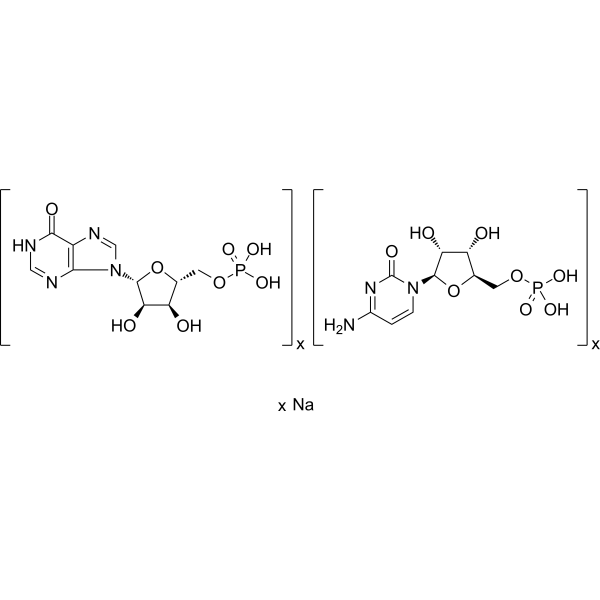 0 ImagesSynonyms: Poly(I:C) sodiumPolyinosinic-polycytidylic acid (Poly(I:C)) sodium is a synthetic analog of double-stranded RNA and an agonist of toll-like receptor 3 (TLR3) and retinoic acid inducible gene I (RIG-I)-like receptors (RIG-I and MDA5). Polyinosinic-polycytidylic acid sodium can be used as a vaccine adjuvant to enhance innate and adaptive immune responses, and to alter the tumor microenvironment. Polyinosinic-polycytidylic acid sodium can directly trigger cancer cells to undergo apoptosis.
-
Famotidine
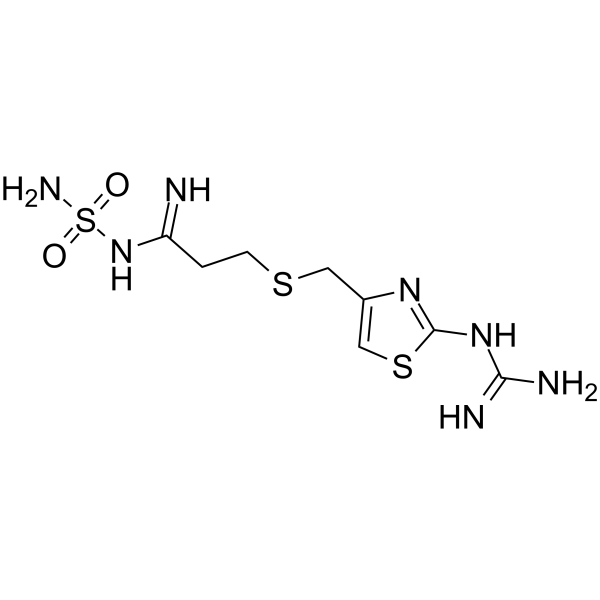 0 ImagesSynonyms: MK-208Famotidine (MK-208) is an orally active and highly selective histamine H2 receptor antagonist. It inhibits gastric acid secretion by blocking the Gs signaling pathway, and regulates intracellular cAMP and ERK pathways. Famotidine inhibits TLR3-mediated inflammatory pathways, and reduces the expression of various inflammatory mediators and interferon-related genes. Famotidine scavenges DPPH and nitric oxide free radicals, alleviates oxidative stress damage in gastric tissue, inhibits proMMP-9, improves vascular endothelial permeability, and restores the normal physiological functions of neutrophils and eosinophils. Famotidine crosses intestinal epithelial cells via facilitated diffusion and passive diffusion, blocks paracellular cation transport, and increases intestinal transepithelial electrical resistance. Famotidine reduces serum levels of transaminases and alkaline phosphatase, exerts analgesic effects and gastric protective effects simultaneously. Famotidine can be used in studies related to COVID-19, liver injury and acute gastric ulcer.
-
AN-3485
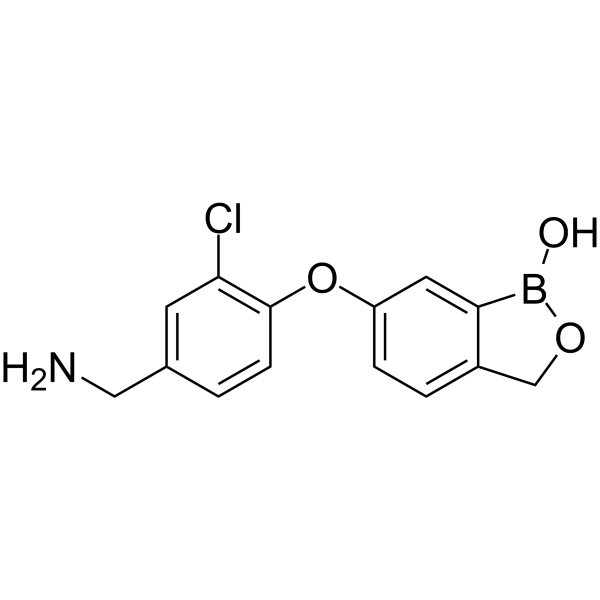 0 ImagesArt. -Nr.: HY-18325CAS. Nr.: 1213827-99-6AN-3485 is a benzoxaborole analogue and an orally active antagonist of the Toll-like pathway. AN-3485 can inhibit TLR-mediated inflammatory cytokine secretion and has significant anti-inflammatory activity. In addition, AN-3485 also has certain anti-tumor activity.
-
Poly (I:C):Kanamycin (1:1) sodium
 0 ImagesArt. -Nr.: HY-135748AReinheit: 99.0%Poly (I:C):Kanamycin (1:1) sodium is an isometric complex of Poly (I:C) (HY-135748) and Kanamycin (HY-16566). Poly(I:C) sodium, a synthetic analog of double-stranded RNA, is a TLR3 and retinoic acid-inducible gene I receptor (RIG-I and MDA5) agonist. Poly(I:C) sodium can be used as a vaccine adjuvant to enhance innate and adaptive immune responses and induce apoptosis in cancer cells. Kanamycin is an orally active antibacterial agent (Gram-negative/positive bacteria) that inhibits translocation and causes miscoding by binding to the 70S ribosomal subunit. Kanamycin shows good inhibitory activity against Mycobacterium tuberculosis (susceptible and drug-resistant) and Klebsiella pneumoniae, and can be used in the research of tuberculosis and pneumonia.
-
IAV-IN-5
 0 ImagesArt. -Nr.: HY-183313CAS. Nr.: 3038861-11-6IAV-IN-5 is an orally active inhibitor of influenza A virus (IAV). IAV-IN-5 inhibits viral replication, blocks virus-induced apoptosis, oxidative stress and cytokine storm, and regulates host immune signaling pathways. IAV-IN-5 reduces viral load and inflammatory cytokine levels in lung tissues of IAV-infected mouse models, alleviates body weight loss and pulmonary pathological damage. IAV-IN-5 can be used in studies related to influenza A virus infection.
-
Famotidine (GMP)
 0 ImagesArt. -Nr.: HY-B0377GCAS. Nr.: 76824-35-6Synonyms: MK-208 (GMP)Famotidine GMP (MK-208 GMP) is Famotidine (HY-B0377) produced in GMP guideline. Famotidine is an orally active and highly selective histamine H2 receptor antagonist. It inhibits gastric acid secretion by blocking the Gs signaling pathway, and regulates intracellular cAMP and ERK pathways. Famotidine inhibits TLR3-mediated inflammatory pathways, and reduces the expression of various inflammatory mediators and interferon-related genes. Famotidine scavenges DPPH and nitric oxide free radicals, alleviates oxidative stress damage in gastric tissue, inhibits proMMP-9, improves vascular endothelial permeability, and restores the normal physiological functions of neutrophils and eosinophils. Famotidine crosses intestinal epithelial cells via facilitated diffusion and passive diffusion, blocks paracellular cation transport, and increases intestinal transepithelial electrical resistance. Famotidine reduces serum levels of transaminases and alkaline phosphatase, exerts analgesic effects and gastric protective effects simultaneously. Famotidine can be used in studies related to COVID-19, liver injury and acute gastric ulcer.
-
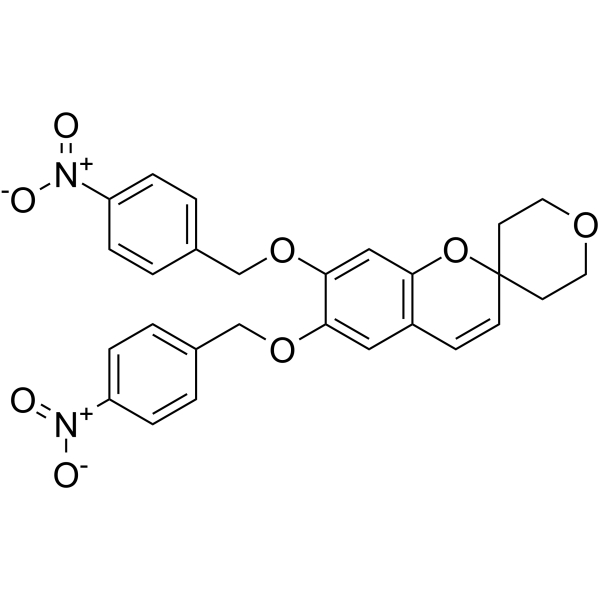
Anti-Influenza agent 12
 0 ImagesArt. -Nr.: HY-189215CAS. Nr.: 3087067-85-1Anti-Influenza agent 12 is an orally active inhibitor of influenza A virus infection. Anti-Influenza agent 12 inhibits RIG-I-mediated innate immune signaling and TLR3-mediated signaling pathways. Anti-Influenza agent 12 inhibits NF-κB phosphorylation and downregulates the expression levels of IRF3, ASC, iNOS, IL-4, IL-6, and IFN-α inflammatory genes. Anti-Influenza agent 12 inhibits viral nucleoprotein (NP) and matrix protein 2 (M2) mRNA transcription and protein synthesis. Anti-Influenza agent 12 inhibits virus-induced apoptosis, reduces ROS and NO production, and maintains mitochondrial membrane potential. Anti-Influenza agent 12 exhibits broad-spectrum activity against H1N1 and H3N2 subtypes, reduces viral load, and alleviates lung tissue damage. Anti-Influenza agent 12 can be used for research on influenza A virus infection.

-
Famotidine (Standard)
 0 ImagesSynonyms: MK-208 (Standard)Famotidine (Standard) (MK-208 (Standard)) is the analytical standard of Famotidine (HY-B0377). This product is intended for research and analytical applications. Famotidine (MK-208) is an orally active and highly selective histamine H2 receptor antagonist. It inhibits gastric acid secretion by blocking the Gs signaling pathway, and regulates intracellular cAMP and ERK pathways. Famotidine inhibits TLR3-mediated inflammatory pathways, and reduces the expression of various inflammatory mediators and interferon-related genes. Famotidine scavenges DPPH and nitric oxide free radicals, alleviates oxidative stress damage in gastric tissue, inhibits proMMP-9, improves vascular endothelial permeability, and restores the normal physiological functions of neutrophils and eosinophils. Famotidine crosses intestinal epithelial cells via facilitated diffusion and passive diffusion, blocks paracellular cation transport, and increases intestinal transepithelial electrical resistance. Famotidine reduces serum levels of transaminases and alkaline phosphatase, exerts analgesic effects and gastric protective effects simultaneously. Famotidine can be used in studies related to COVID-19, liver injury and acute gastric ulcer.
-
SMU-14a
 0 ImagesArt. -Nr.: HY-176192SMU-14a is a selective Toll-like receptor 3 (TLR3) inhibitor wirh an IC50 of 0.18 μM. SMU-14a reduces phosphorylation of p65, ERK, and TBK1 via NF-κB, MAPK, and IRF3 signaling pathways. SMU-14a inhibits IL-6 secretion in mouse peritoneal macrophages, downregulates TNF-α in human peripheral blood monocytes and decreases serum alanine aminotransferase (ALT) and aspartate aminotransferase (AST) levels. SMU-14a can be used for the research of acute hepatitis.
-
Polyinosinic-polycytidylic acid potassium
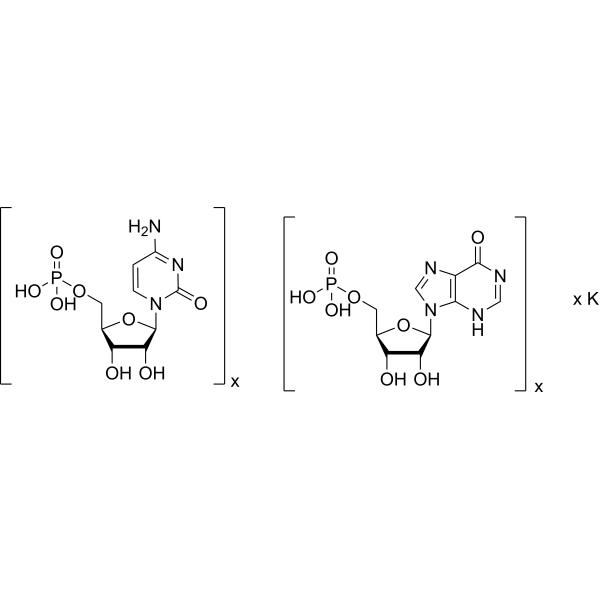 0 ImagesArt. -Nr.: HY-134958CAS. Nr.: 31852-29-6Synonyms: Poly(I:C) potassiumPolyinosinic-polycytidylic acid potassium (Poly(I:C) potassium) is a synthetic analog of double-stranded RNA and an agonist of toll-like receptor 3 (TLR3) and retinoic acid inducible gene I (RIG-I)-like receptors (RIG-I and MDA5). Polyinosinic-polycytidylic acid sodium can be used as a vaccine adjuvant to enhance innate and adaptive immune responses, and to alter the tumor microenvironment. Polyinosinic-polycytidylic acid potassium can directly trigger cancer cells to undergoApoptosis.
-
Famotidine-13C3
 0 ImagesArt. -Nr.: HY-W777002CAS. Nr.: 1185241-48-8Synonyms: MK-208-13C3Famotidine-13C3 (MK-208-13C3) is the 13C3-labeled Famotidine (HY-B0377). Famotidine (MK-208) is an orally active and highly selective histamine H2 receptor antagonist. It inhibits gastric acid secretion by blocking the Gs signaling pathway, and regulates intracellular cAMP and ERK pathways. Famotidine inhibits TLR3-mediated inflammatory pathways, and reduces the expression of various inflammatory mediators and interferon-related genes. Famotidine scavenges DPPH and nitric oxide free radicals, alleviates oxidative stress damage in gastric tissue, inhibits proMMP-9, improves vascular endothelial permeability, and restores the normal physiological functions of neutrophils and eosinophils. Famotidine crosses intestinal epithelial cells via facilitated diffusion and passive diffusion, blocks paracellular cation transport, and increases intestinal transepithelial electrical resistance. Famotidine reduces serum levels of transaminases and alkaline phosphatase, exerts analgesic effects and gastric protective effects simultaneously. Famotidine can be used in studies related to COVID-19, liver injury and acute gastric ulcer.
-
Famotidine-d4
 0 ImagesArt. -Nr.: HY-W707517CAS. Nr.: 2707433-64-3Synonyms: MK-208-d4Famotidine-d4 (MK-208-d4) is the deuterated-labeled Famotidine (HY-B0377). Famotidine (MK-208) is an orally active and highly selective histamine H2 receptor antagonist. It inhibits gastric acid secretion by blocking the Gs signaling pathway, and regulates intracellular cAMP and ERK pathways. Famotidine inhibits TLR3-mediated inflammatory pathways, and reduces the expression of various inflammatory mediators and interferon-related genes. Famotidine scavenges DPPH and nitric oxide free radicals, alleviates oxidative stress damage in gastric tissue, inhibits proMMP-9, improves vascular endothelial permeability, and restores the normal physiological functions of neutrophils and eosinophils. Famotidine crosses intestinal epithelial cells via facilitated diffusion and passive diffusion, blocks paracellular cation transport, and increases intestinal transepithelial electrical resistance. Famotidine reduces serum levels of transaminases and alkaline phosphatase, exerts analgesic effects and gastric protective effects simultaneously. Famotidine can be used in studies related to COVID-19, liver injury and acute gastric ulcer.
-
ENDO12
 0 ImagesArt. -Nr.: HY-183079ENDO12 is an inhibitor of the Munc13-4-STX7 protein complex, with a Kd value of 2.7 µM for STX7. ENDO12 blocks the interaction of Munc13-4-STX7. ENDO12 inhibits endolysosomal flux, endolysosomal cargo degradation, the extracellular signal-regulated kinase signaling pathway in neutrophils, the IFN regulatory factor signaling pathway in plasmacytoid dendritic cells, and the responses of primary dendritic cells to TLR3, TLR7, and TLR9. ENDO12 alleviates CpG-induced systemic inflammation by reducing the levels of myeloperoxidase, IL-6 and IFNγ. ENDO12 does not interfere with the host's antiviral response to lymphocytic choriomeningitis virus infection.\nENDO12 can be used in studies related to systemic inflammation.
-
Famotidine-13C,d3
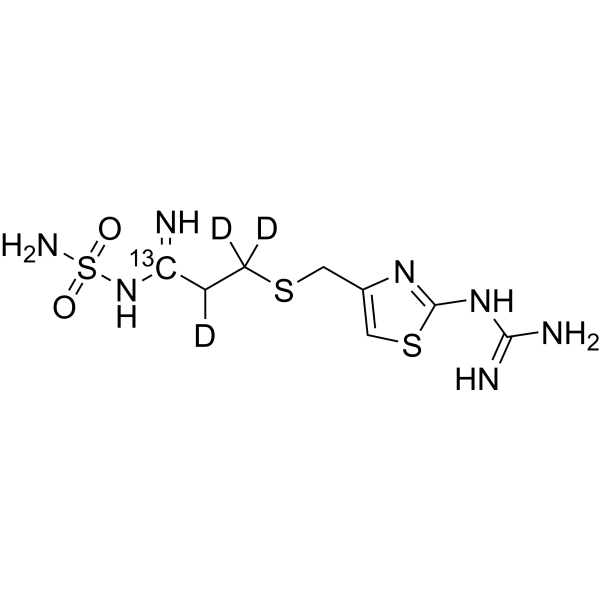 0 ImagesArt. -Nr.: HY-B0377SCAS. Nr.: 2744683-81-4Synonyms: MK-208-13C,d3Famotidine-13C,d3 (MK-208-13C,d3) is the deuterated, 13C-labeled Famotidine (HY-B0377). Famotidine (MK-208) is an orally active and highly selective histamine H2 receptor antagonist. It inhibits gastric acid secretion by blocking the Gs signaling pathway, and regulates intracellular cAMP and ERK pathways. Famotidine inhibits TLR3-mediated inflammatory pathways, and reduces the expression of various inflammatory mediators and interferon-related genes. Famotidine scavenges DPPH and nitric oxide free radicals, alleviates oxidative stress damage in gastric tissue, inhibits proMMP-9, improves vascular endothelial permeability, and restores the normal physiological functions of neutrophils and eosinophils. Famotidine crosses intestinal epithelial cells via facilitated diffusion and passive diffusion, blocks paracellular cation transport, and increases intestinal transepithelial electrical resistance. Famotidine reduces serum levels of transaminases and alkaline phosphatase, exerts analgesic effects and gastric protective effects simultaneously. Famotidine can be used in studies related to COVID-19, liver injury and acute gastric ulcer.
-
Famotidine hydrochloride
 0 ImagesArt. -Nr.: HY-B0377ACAS. Nr.: 125193-62-6Synonyms: MK-208 hydrochlorideFamotidine hydrochloride (MK-208 hydrochloride) is an orally active and highly selective histamine H2 receptor antagonist. It inhibits gastric acid secretion by blocking the Gs signaling pathway, and regulates intracellular cAMP and ERK pathways. Famotidine hydrochloride inhibits TLR3-mediated inflammatory pathways, and reduces the expression of various inflammatory mediators and interferon-related genes. Famotidine hydrochloride scavenges DPPH and nitric oxide free radicals, alleviates oxidative stress damage in gastric tissue, inhibits proMMP-9, improves vascular endothelial permeability, and restores the normal physiological functions of neutrophils and eosinophils. Famotidine hydrochloride crosses intestinal epithelial cells via facilitated diffusion and passive diffusion, blocks paracellular cation transport, and increases intestinal transepithelial electrical resistance. Famotidine hydrochloride reduces serum levels of transaminases and alkaline phosphatase, exerts analgesic effects and gastric protective effects simultaneously. Famotidine hydrochloride can be used in studies related to COVID-19, liver injury and acute gastric ulcer.
-
Famotidine-13C
 0 ImagesArt. -Nr.: HY-B0377S1Synonyms: MK-208-13CFamotidine-13C (MK-208-13C) is the 13C-labeled Famotidine (HY-B0377). Famotidine (MK-208) is an orally active and highly selective histamine H2 receptor antagonist. It inhibits gastric acid secretion by blocking the Gs signaling pathway, and regulates intracellular cAMP and ERK pathways. Famotidine inhibits TLR3-mediated inflammatory pathways, and reduces the expression of various inflammatory mediators and interferon-related genes. Famotidine scavenges DPPH and nitric oxide free radicals, alleviates oxidative stress damage in gastric tissue, inhibits proMMP-9, improves vascular endothelial permeability, and restores the normal physiological functions of neutrophils and eosinophils. Famotidine crosses intestinal epithelial cells via facilitated diffusion and passive diffusion, blocks paracellular cation transport, and increases intestinal transepithelial electrical resistance. Famotidine reduces serum levels of transaminases and alkaline phosphatase, exerts analgesic effects and gastric protective effects simultaneously. Famotidine can be used in studies related to COVID-19, liver injury and acute gastric ulcer.
-
Poly(C)
 0 ImagesArt. -Nr.: HY-W682115CAS. Nr.: 30811-80-4Synonyms: Polycytidylic acidPoly(C) (Polycytidylic acid) is a pleiotropic immunostimulant that specifically binds to TLR3, RIG-I and MDA5 receptors. Poly (C) recruits adaptor proteins to activate downstream signaling pathways and induce the production of type I interferons and inflammatory cytokines. Poly (C) triggers cancer cell apoptosis via the intrinsic or extrinsic caspase pathway, thereby exerting inhibitory effects on tumor growth and metastasis. Poly (C) acts as a vaccine adjuvant to modify the tumor microenvironment, regulate the expression of endothelial adhesion molecules and induce virus-like immune responses. Poly (C) can be applied to research related to melanoma, various solid tumors, hematological malignancies and autoimmune insulin-dependent diabetes mellitus.
- 1
- 2




